
“The true measure of a society’s civilization is its treatement of its women and children”
Compassionate Care for All Families
Three Key Motivators for Training Your Perinatal Team
For the Patient- It's the right thing to do. Improve health outcomes, patient satisfaction and Press Ganey scores.
For the Professional - Mitigate compassion fatigue, burnout and secondary trauma. Improve job satisfaction, self awareness and personal growth.
For the Payor/Funder- Comply with the Centers for Medicare and Medicaid Services (CMS) and private payor guidelines and requirements for training staff in “Respectful, Equitable and Supportive Care” in congruence with implementation of the Alliance for Innovation in Maternal Health (AIM) Safety Bundles.
Specialized Training and Education Topics Include:
-
Respectful, equitable and supportive care (a part of the Alliance for Innovation on Maternal Health (AIM) Safety Bundles)
Adverse Childhood Events
Implementation of AIM Safety Bundles
SAMHSA’s Guidance on TIC
Compassionate Communication
Person Centered Language
Historical perspective of midwifery and obstetrics including obstetric mistreatment and abuse
Birth trauma prevention and recovery
Compassion fatigue and secondary trauma
Self-reflective practice
Mindfulness for health care professionals
-
Birth Story Medicine Specialist Training
Historical perspective on birth trauma in the US
Historical perspective on obstetrics and midwifery in the US including obstetric mistreatment and abuse
Incidence and risks for birth trauma
Birth trauma prevention
Birth trauma recovery
-
Implementation of AIM Safety Bundle - Care for Pregnant and Parenting People with Substance Use Disorder
Trauma-informed and trauma-responsive care
Co-located care for pregnant and parenting people with SUD
Care for infants affected by NAS/NOWS
Eat Sleep Console Model of Care
Lactation with Medication Assisted Therapy/Treatment
Prenatal Preparation
Postpartum Support
Trauma-informed childbirth and parenting education
Standardized screening tools
Harm reduction
Strength-based and solution-focused communication
Mindfulness practices and tools for patients with SUD
Harm reduction safe sleep education
-
Centers for Medicare and Medicaid Services (CMS) staff training guidance
Alliance for Innovation on Maternal Health - Providing respectful, equitable and supportive care staff training
-
US Maternal Morbidity and Mortality data and national and regional initiatives for quality improvement
Systemic Racism
Implicit Bias
LGBTQIA+ Sensitive Care
Standardized screening tools
Social determinants of health
“Farrah’s approach to education is transformative. Learners come away with a new lens to care for patients in a trauma-informed and trauma-responsive manner that benefits patients, families, providers and staff.”
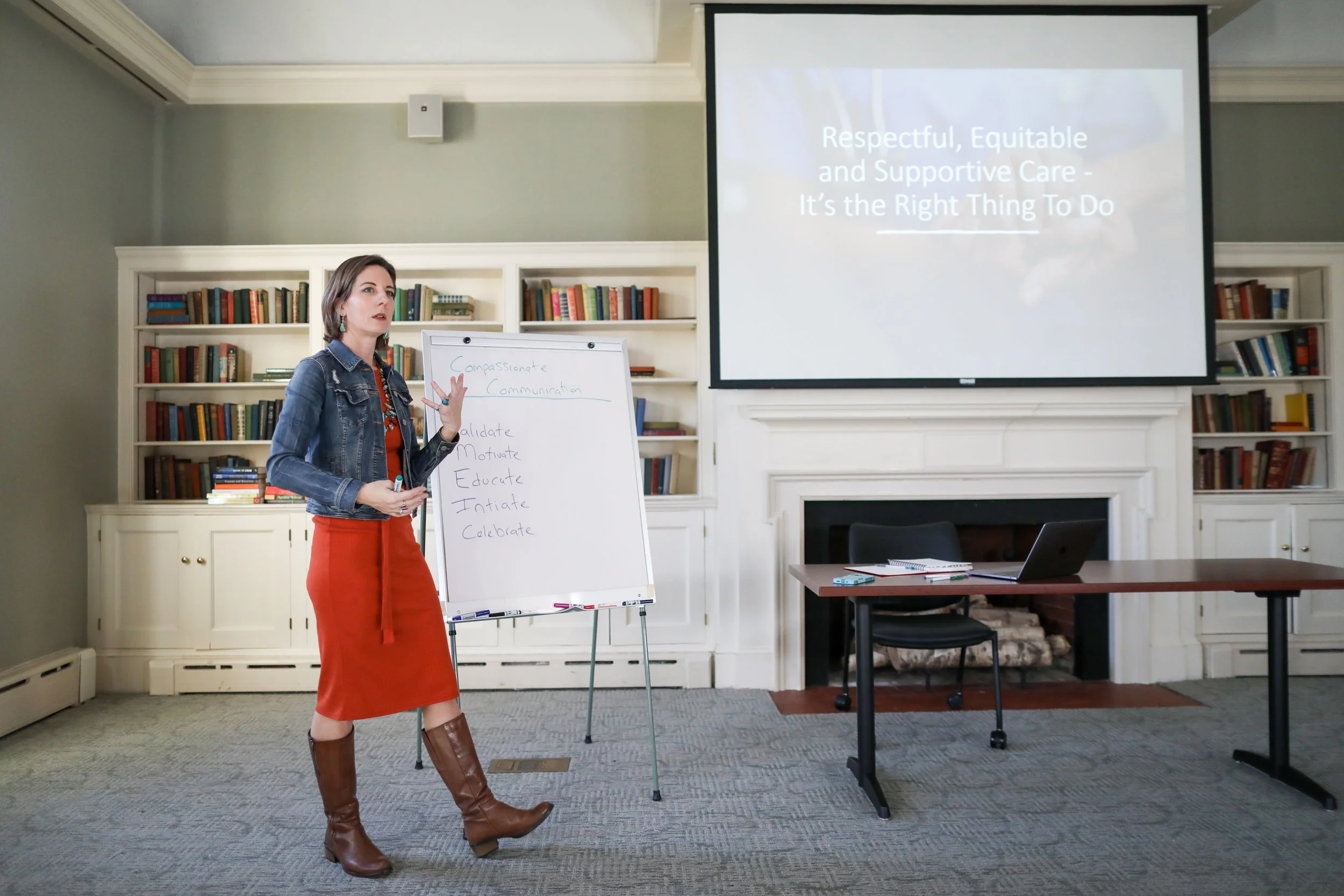
Foundational Framework
Motherhood is a complex and transformative milestone encompassing biological processes (pregnancy, birth, postpartum), identity shifts, and evolving social and cultural expectations. Ongoing trends in maternal morbidity and mortality, alongside patient experiences and the rise in self reported birth trauma, underscore the need to improve care quality across the perinatal continuum—from prenatal care through birth and into the home and community.
Continuing education is essential for perinatal professionals to better understand the lived experiences of patients and to develop skills for compassionate, respectful, and effective communication that enables the best outcomes possible for each patient.
My trainings equip birth professionals with self-awareness, and practical tools to support behavior change and foster professional growth, grounded in a deeper understanding of the birth experience and perinatal period and its lasting impact on parents and families. Education provided will increase practitioner knowledge, perspective and capacity to care for all patients, especially those who have experienced or are experiencing birth trauma or perinatal mental health conditions or who are affected by substance use.